The New York City Ballet (NYCB) of today is not the New York City Ballet of George Balanchine. And it shouldn’t be. Even George Balanchine did not expect his company, the NYCB, to have the same look, dance aesthetic or point of view of its Golden Years of the 1950s through the 1970s. In fact, Balanchine even stated that he didn’t expect his ballets to survive.
Balanchine’s ballets have survived and have remained with their structure in place with similar musicality and verve. Still, the company is not the same.
The technical ability of the current dancers far outweighs the NYCB dancers of half a century ago—and that is a given. But the differences go beyond technical acumen. And those differences—if one is old enough to remember the NYCB of yore—are most evident in all Balanchine programs; particularly, the program—Allegro Brillante, La Source, Firebird— presented by the company at the January 25 matinee.
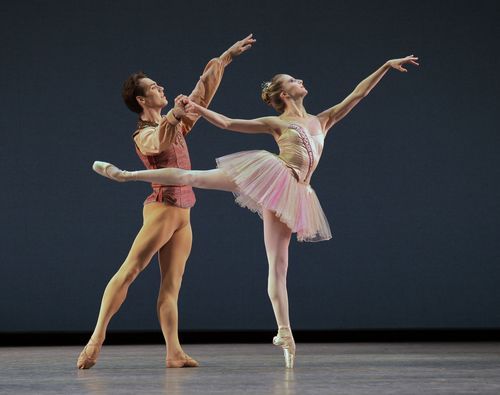
Allegro Brillante was brilliantly danced by Tiler Peck and Tyler Angle. Developed as a star vehicle by Balanchine for Maria Tallchief in 1956, Allegro Brillante is set to an energetic, yet lyrical Tchaikovsky score.
Tiler Peck danced the main ballerina role with all the lush virtuosity and lyrical sensitivity that Balanchine intended for this work. Yet, Peck went beyond what most ballerinas in NYCB’s vast history were able to bring to this role. Peck represents the new NYCB ballerina where technical virtuosity, speed, and lyricism are expected. And maybe even stage presence. What Peck embodies in this vein of NYCB ballerinas is supreme confidence. There are no struggles, no visible technical imperfections, no easing into a role—particularly Balanchine’s abstract works. Just sit back, enjoy, marvel, and be transported!!
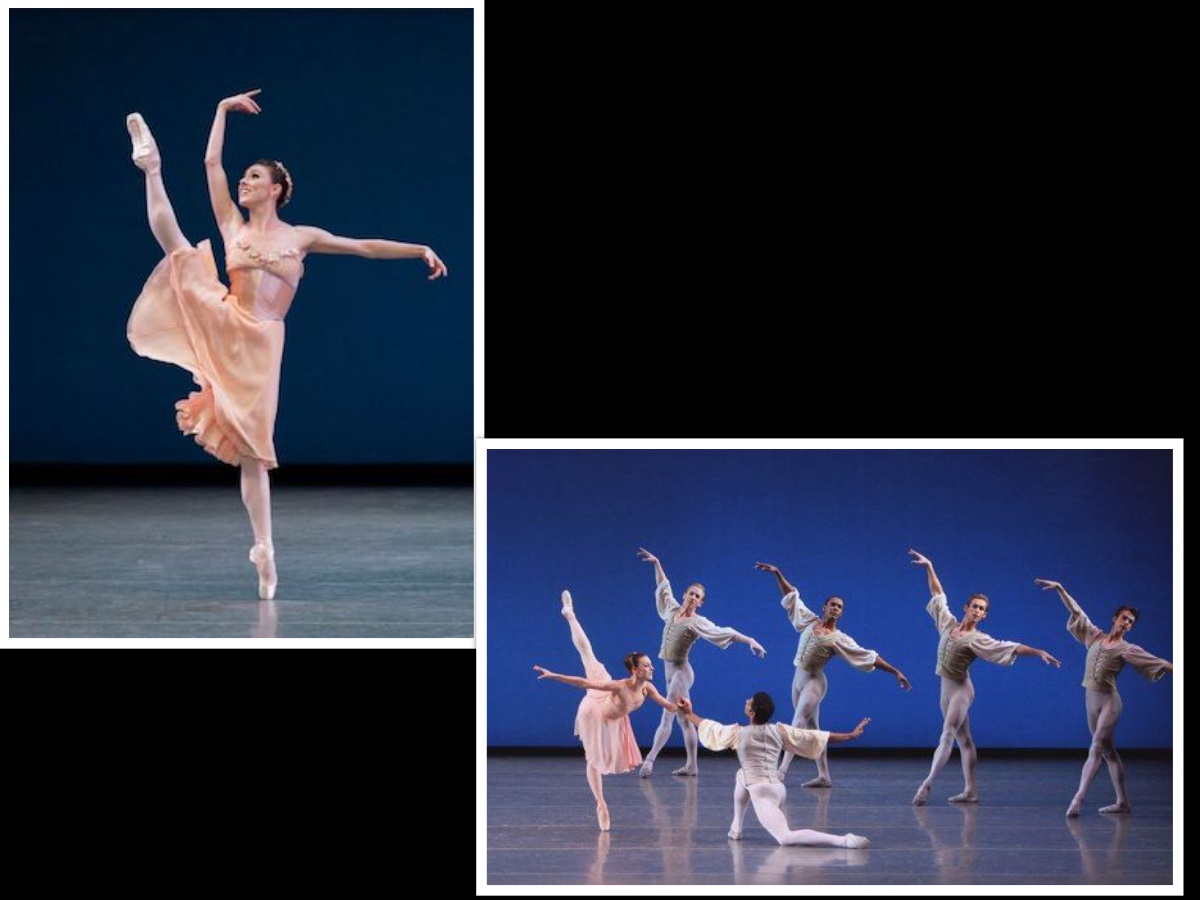
La Source was another matter. Created for Violette Verdy, this sweet concoction of a ballet embodies French ballet style, perhaps, more than any Balanchine ballet in the repertoire. The company demonstrated Balanchine’s version of precise, crystalline French technique expertly. There was wit, sparkle, and frothiness.
Erica Pereira was just the right combination of exactitude and spun sugar. Perhaps, there could have been a bit more sauciness in her performance, but that’s forgiven in that no one can bring Violette Verdy’s piquant style to this work. Harrison Ball was just fine as the Pereira’s partner, bringing a measured amount of regal gentility and technical buoyancy.
Perhaps, the most vivacious element of La Source is the second ballerina’s solo and subsequent interactions with the corps de ballet. Rachel Hutsell captured that special whimsical sauciness that is so emblematic of this Balanchine work. Additionally, Hutsell represents the direction NYCB is heading with Jonathan Stafford and Wendy Whelan at the helm.
Currently, NYCB has 10 African American dancers, a record number for any classical ballet company other than the Dance Theatre of Harlem. At this performance there were two black dancers in major roles.
That is not to say that Balanchine was against inclusion. After all, Balanchine and Lincoln Kirsten put Arthur Mitchell as lead dancer in many ballets in the 1950s and 60s in spite of death threats and bomb scares. However, Balanchine was only able to accomplish so much, and his dream of a fully integrated company is coming to fruition under Stafford and Whelan.
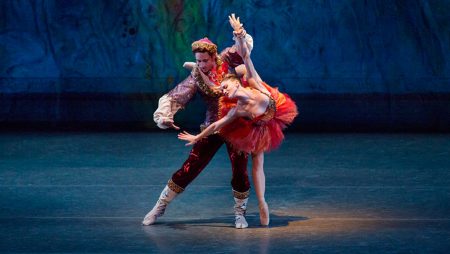
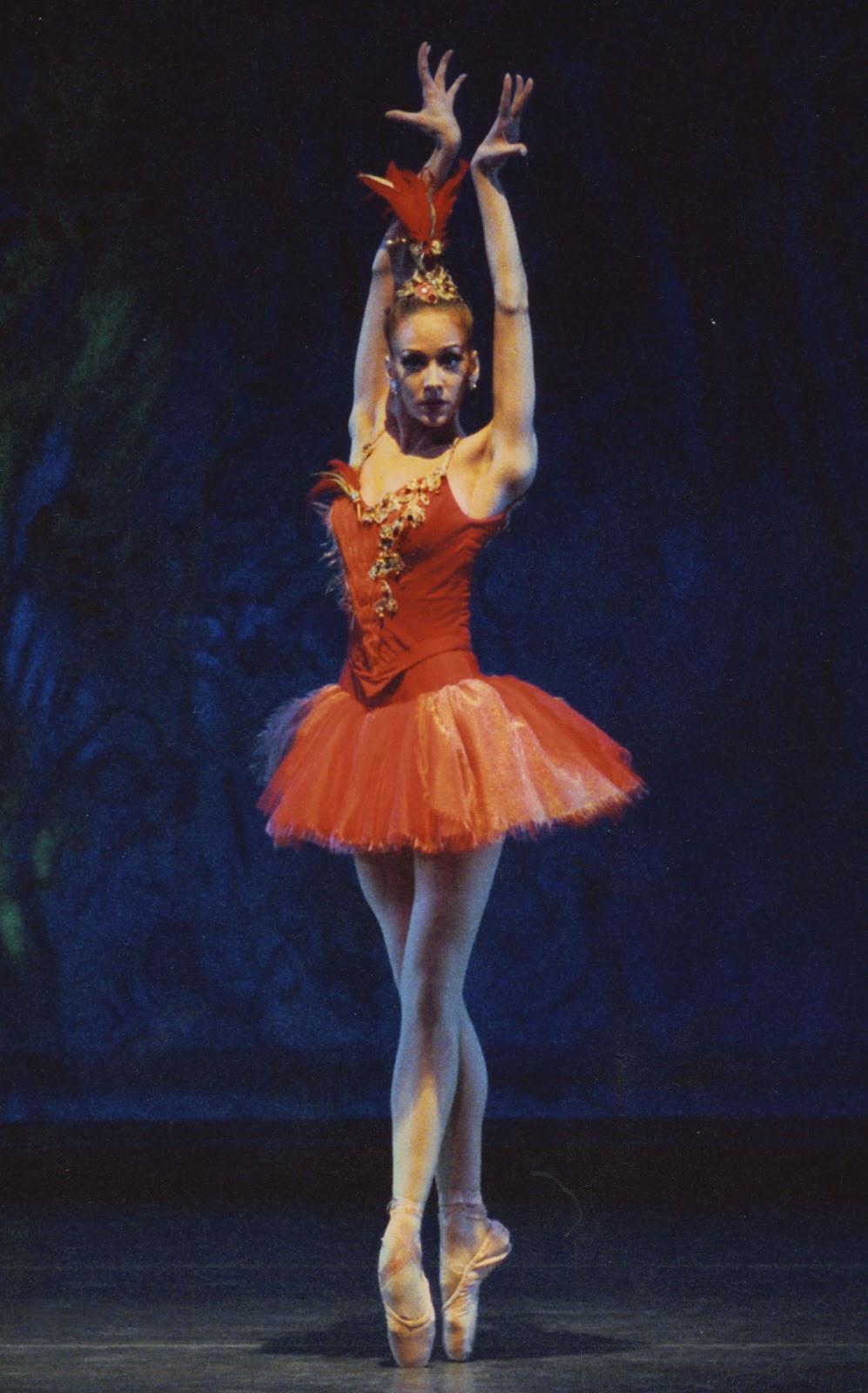
Balanchine’s Firebird, another star vehicle for Maria Tallchief, is based on a truncated Stravinsky score. A bonified hit for the NYCB in 1949, Balanchine’s Firebird has gone through many revisions with Jerome Robbins providing choreography for Kotchei, the monsters, and golliwogs.
This particular Balanchine version works very well, with excellent airborne choreography for the firebird, which Sara Mearns inhabited so convincingly. The challenge with this particular version is that some of the story is lost amid inadequate mime sequences. And unless you already know the story, the plot is confusing.
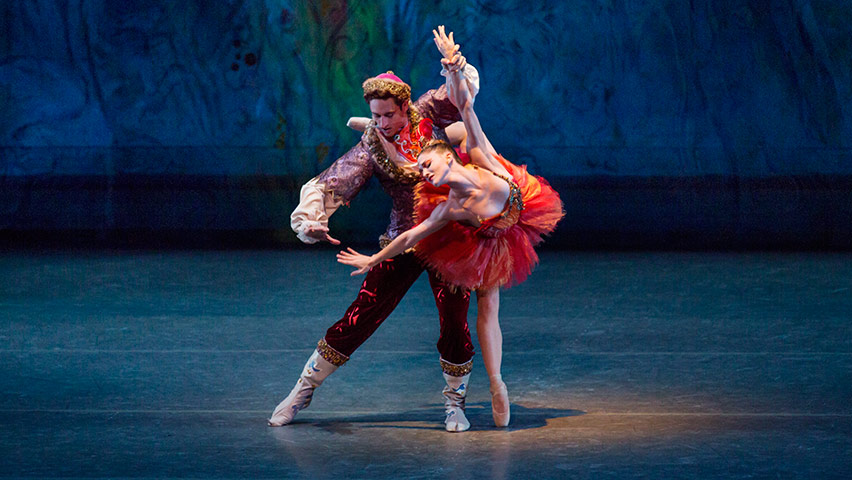
Then again, Balanchine was not big on story ballets. And the joy of Firebird is Stravinsky’s rich score and Balanchine’s ability to create very athletic steps for the firebird without looking like an Olympic hurdles’ competition.
Mearns’ firebird is an example of the new kind of dancer that is filling the ranks at NYCB. Mearns’ firebird would have been anomaly at the NYCB of the past. Always, a very athletic dancer, Mearns’ firebird is all that and much more. Her firebird is powerful, determined, lyrical, but most of all free, never an enslaved creature. And Silas Farley’s Prince Igor is the epitome of a prince; respectful, gracious, and regal.
The new NYCB is perhaps what Balanchine had envisioned all along. And with the company’s new leadership, the NYCB is primed to unearth and present some new truths, new colors, and a layer of unfettered beauty.
—William S. Gooch
Image credits
- firebird-kowroski-a-danceviewtimes.jpg — Editorial image.
- allegro-brillante.jpg — Editorial image.
- la-source-pinterest.jpg — Credit/source: pinterest.com.
- firebird-bouder-jpeck-c38330-15-feature.jpg — Credit/source: newyorkballet.com.
- firebird-bouder-jpeck-c38330-15-feature-2.jpg — Editorial image.

Reader Discussion
Start the Conversation
Thoughtful comments, questions, and fashion conversation from Fashion Reverie readers.
Reader Guidelines
Keep the conversation thoughtful, relevant, and respectful. Comments may be moderated before appearing on Fashion Reverie.
No comments yet. Start the conversation with a thoughtful note or question.